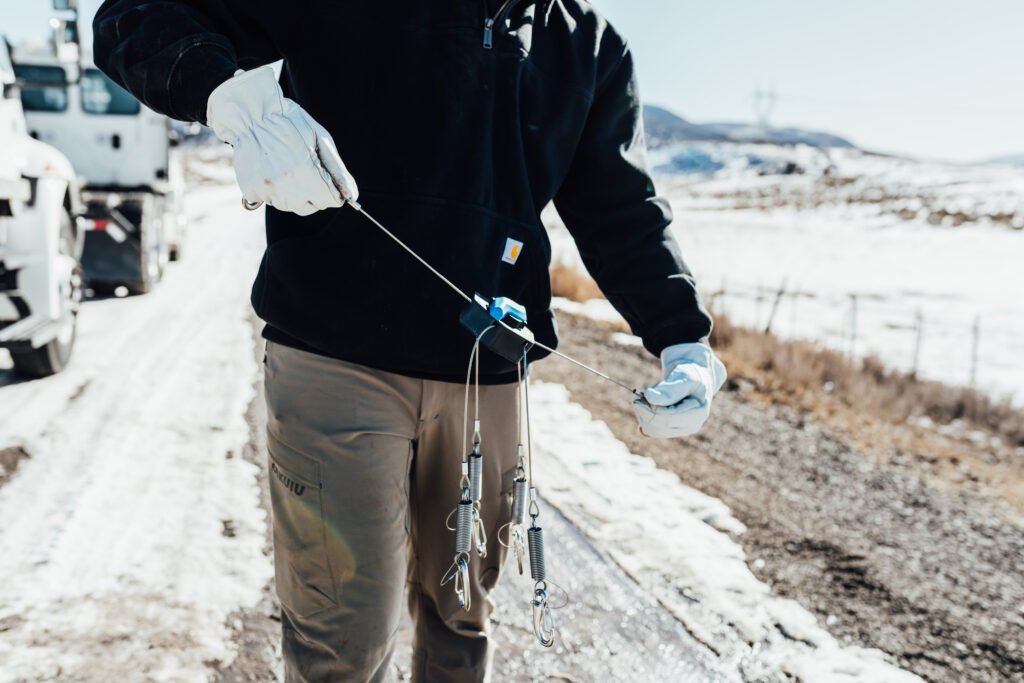
Most people don't think about what a chain tensioner is made of until it fails. But a tensioner lives in one of the harshest environments on your vehicle: it's bolted next to a spinning tire, soaked in road salt and slush, flexed thousands of times per trip, and left outside in temperatures that can drop well below zero. Most tensioners on the market are built from rubber, basic plastic, or low-grade metal — materials chosen for cost, not for the job. The Kranken was engineered the other way around.
Why Materials Matter More Than People Think
A snow chain tensioner has to survive four things simultaneously: sustained cold, constant vibration, road salt exposure, and mechanical load from being cranked tight on every use. Most consumer-grade tensioners are optimized for one of those — usually low upfront cost — and degrade quickly under the other three. Cracked rubber, stripped gears, and rusted hardware aren't manufacturing defects; they're the predictable result of using the wrong material for a genuinely demanding job.
The Housing: Glass-Reinforced Nylon
Impact-Modified Nylon, 17% Glass Fiber
The Kranken's outer shell is made from an impact-modified nylon reinforced with 17% glass fiber — the same class of material used in power tools and industrial equipment. It's lightweight enough to handle quickly but dense enough to resist cracking under impact or sustained cold.
Basic plastic housings go brittle in freezing temperatures and chalky or cracked after repeated UV exposure. Glass-reinforced nylon does neither — which is why the housing survived a 40-foot drop test (roughly a four-story fall) without failing.
The Gears: 17-4 PH Stainless Steel
Aerospace-Grade Precision Alloy
The gears inside The Kranken are machined from 17-4 PH stainless — a high-strength alloy used in aerospace components and surgical instruments because it holds tight tolerances under repeated mechanical load without bending, stripping, or wearing down.
A ratchet mechanism gets cranked tight on every single chain-up — that's thousands of load cycles over a tensioner's lifetime. Gears cut from softer metal or cast from basic alloys wear down, strip their teeth, or lose precision over time, which is exactly when a tensioner starts under-tensioning without the driver noticing.
The Hardware: 316 Stainless Steel
Marine-Grade, Salt-Proof
Every exposed metal component — including the springs and cable — is 316 stainless steel, the same grade used on ocean-going boats. Road salt, slush, and moisture won't corrode it, and its passive surface layer actually self-heals minor scratches rather than rusting through.
For a driver running winter routes, road salt exposure is a daily occurrence, not an occasional one. Standard steel hardware corrodes, seizes, and weakens under that kind of repeated exposure. Marine-grade 316 stainless is chosen specifically because it doesn't.
What the Materials Add Up To
Engineering choices only matter if they hold up under real testing. Here's what the material selection translates to in measured performance.
| The Kranken | Typical Rubber/Basic-Metal Tensioner | |
|---|---|---|
| What it's made of | Marine-grade stainless steel, glass-reinforced nylon | Rubber or low-grade metal |
| Cold weather performance | Rated to -40°F, no stiffening | Rubber goes brittle in hard freezes |
| Road salt exposure | Zero corrosion after 24-hr salt test | Rusts and degrades quickly |
| Expected lifespan | No expiration — season after season | 1–3 seasons before rubber cracks |
Testing conducted by The Kranken. Results based on internal product testing and field data.
Who Notices Material Quality First
Frequently Asked Questions
What is the Kranken's housing made of?
The Kranken's outer housing and handle are made from an impact-modified nylon reinforced with 17% glass fiber, the same class of material used in power tools and industrial equipment. It's rated to -40°F, UV stabilized, and drop resistant.
Why does the Kranken use 17-4 PH stainless steel for its gears?
17-4 PH stainless is a high-strength alloy used in aerospace and surgical instruments because it holds precise tolerances under repeated load without bending, stripping, or fatiguing — critical for a ratchet mechanism that gets cranked tight on every chain-up.
Is the Kranken's stainless steel hardware actually rust-proof?
The Kranken's springs, cable, and exposed hardware are made from 316 stainless steel, the same marine grade used on ocean-going boats. It resists corrosion from road salt and moisture, and its passive oxide layer allows minor surface scratches to self-heal rather than rust through.
Does cold weather affect how well the Kranken holds tension?
The Kranken's housing and internal components are rated to -40°F. Unlike rubber-based tensioners, which stiffen and lose elasticity in a hard freeze, the Kranken's stainless steel mechanism maintains constant tension output regardless of temperature.