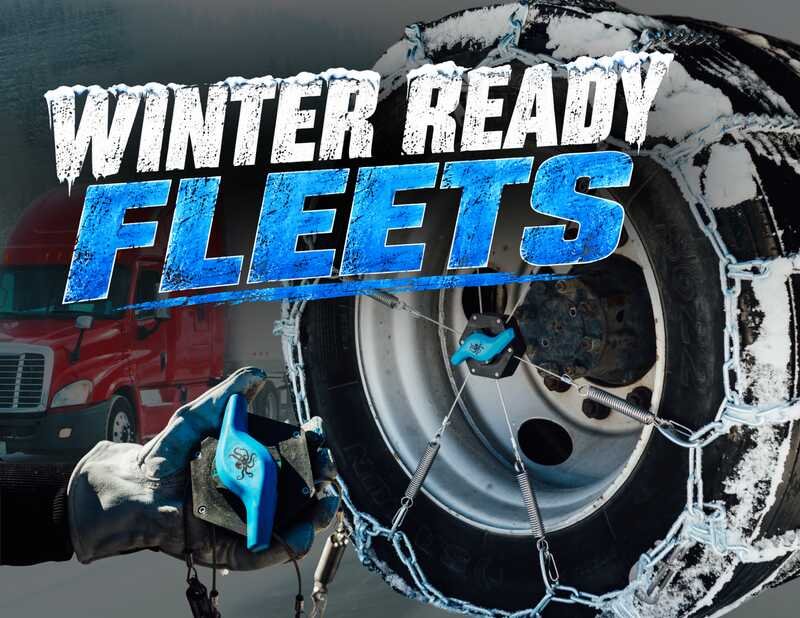
Every fall, the same thing happens. A storm advisory goes out, chain control goes up on the passes, and fleet managers scramble to get trucks, chains and drivers ready all at once. By the time the first truck gets turned around at a checkpoint, it's too late to do it right.
Fleets that plan ahead don't just avoid citations. They keep freight moving while other trucks sit on the shoulder waiting out the weather. This guide covers what to get in place before the season starts.
Why Winter Prep Can't Wait
Chain law season arrives on the weather's schedule, not yours. Many western states enforce chain requirements on major freight corridors once conditions turn, and the rules change by state, by route and sometimes by the hour.
- Checkpoints don't negotiate. A truck without the required chains, or with chains installed wrong, can be turned around, cited or held until conditions improve.
- Weather moves faster than procurement. Ordering chains and accessories after the first storm means waiting while competitors run.
- Every driver is a variable. A rotating crew means different habits, different experience and different results at every wheel.
The challenge isn't knowing the law exists. It's making compliance routine across many trucks, many drivers and routes that can go from dry pavement to a chain checkpoint in under an hour.
The Hidden Cost of Traditional Tensioners
On paper, traditional tensioners are cheap. In practice, they show up in places most fleets never track.
- Install time adds up. A few minutes per wheel position doesn't sound like much until you multiply it across a fleet, a shift and a winter of storms.
- Tension depends on the driver. Every driver tightens chains a little differently, so tension and safety vary truck to truck.
- Loose chains cause damage. A chain that slackens mid-route can strike fenders, brake lines, air lines and wiring.
- Roadside re-tightening burns hours. Every stop to fix a loose chain is time your driver isn't moving freight, often on a narrow shoulder in bad visibility.
None of these costs appear as a line item on an invoice. They show up as late loads, repair tickets and driver frustration.
What Fleet Managers Actually Need
Ask fleet managers what they want from winter equipment and the list is short.
- Consistency. It works the same way every time, no matter who installs it.
- Durability. It holds up under real mileage, road salt and temperature swings, not just a demo.
- Speed. It gets a truck through a checkpoint and back up to speed without eating half a shift.
That's a different standard from what most chain accessories are built for. Traditional tensioners were designed to be cheap and simple, not to hold steady tension through hours of rough mountain driving with a loaded trailer behind them.
How The Kranken Helps Fleets
The Kranken is a patented automatic snow chain tensioner (U.S. Patent No. 12,485,712) built to take the guesswork out of chaining up.
- Fast installation. Designed to go on in under 30 seconds per wheel position, even for a driver doing it for the first time in the dark.
- Automatic tensioning while driving. Chains stay tight over rough terrain without a stop to retighten.
- One-click removal. Drivers can take chains off as soon as conditions allow instead of losing time at the bottom of the grade.
- Aerospace- and marine-grade materials. Built to handle fleet mileage, salt and cold all season.
Because tension is automatic rather than driver-dependent, every truck in your fleet performs the same way regardless of who's driving. That's consistency you can write into a maintenance plan. The Kranken comes in two models, The Kranken and The Kranken XL, so you can match the tensioner to your chain setup.
Building Your Fleet's Winter Playbook
A short checklist, worked through before the first advisory, prevents most mid-season scrambles.
- Inspect and standardize now. Check every chain and tensioner across the fleet, retire anything worn, and equip trucks the same way.
- Train once, train everyone. Run a single hands-on install session so drivers aren't relying on habit at a checkpoint at 2 a.m.
- Stock spares at key terminals. A damaged chain or worn tensioner shouldn't take a truck out of service mid-route.
- Map your corridors. List every route your trucks run and confirm the chain requirements with each state's DOT before the season starts.
- Set a reporting habit. Ask drivers to flag chain problems at the end of each run so issues get fixed in the yard, not on the shoulder.
Plan Purchases Before the Rush
Winter equipment demand spikes when the first big storm hits. Ordering early gives you time to receive gear, train drivers and stage spares while roads are still dry. You can see both models and order at the Kranken shop. For fleet pricing, contact our sales team at sales@thekranken.com.
Frequently Asked Questions
Which states require snow chains for commercial trucks?
Several states, especially in the West, enforce chain requirements on certain routes when conditions call for them. Rules vary by state and route, so check each state's DOT for the corridors your trucks run.
Does The Kranken work with the chains my fleet already uses?
The Kranken is a tensioner that works with snow chains, and it comes in two models, The Kranken and The Kranken XL. Contact our team with your chain setup and we'll help you pick the right model.
Do drivers need special training to use The Kranken?
It's designed for quick installation and one-click removal. A short hands-on session before the season is still a good idea so every driver uses the same process.
How do I get fleet pricing?
Email our sales team at sales@thekranken.com and tell us how many trucks you run.